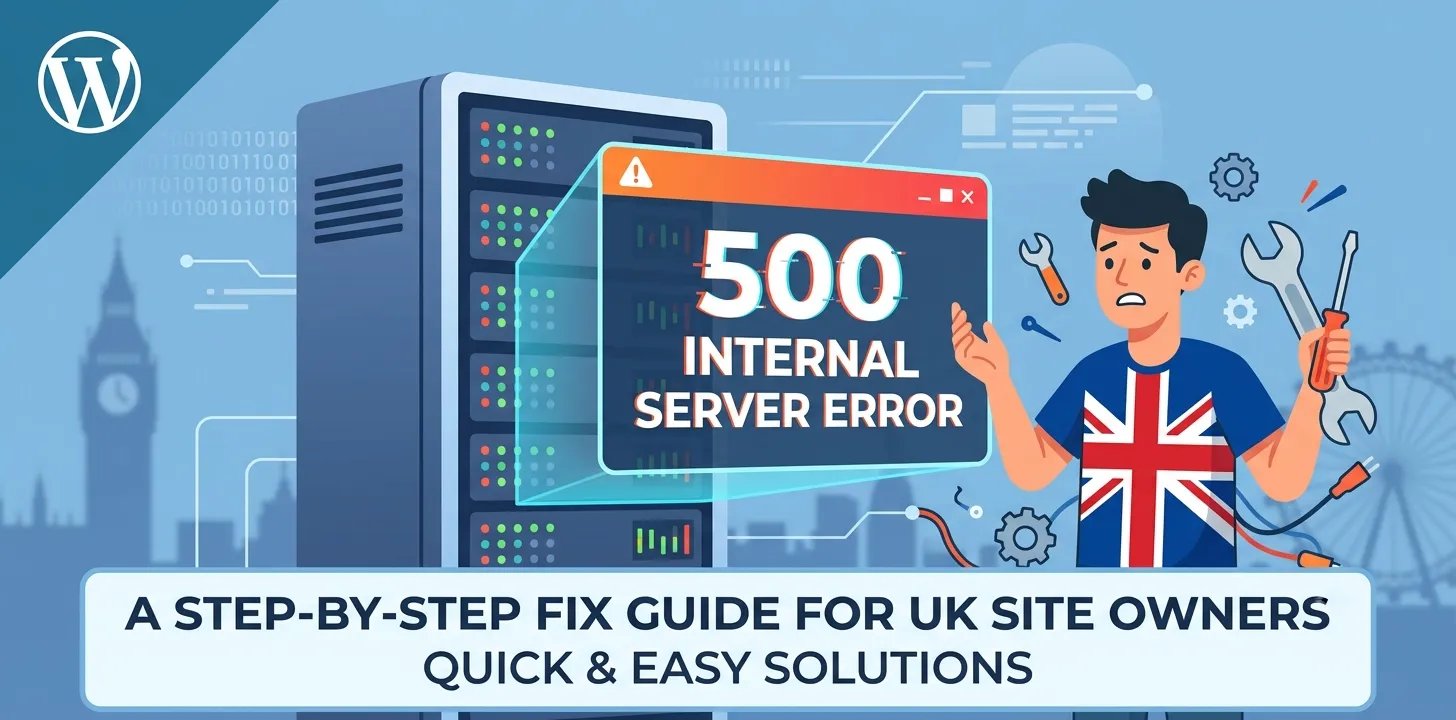

Seeing the 500 internal server error on your WordPress website is scary. Your whole site stops working at once. Your visitors only see a blank screen or a short message that says something went wrong. You cannot reach your admin dashboard, and you might worry that your website is gone forever. Do not panic. Your files and blog posts are safe. This error is very common on WordPress sites across the UK. It just means your server ran into a problem, but it cannot tell you what that problem is. In this simple guide, you will learn how to find the cause and fix it step by step. You do not need to be a tech expert to solve this. Follow these easy steps, and your site will be up and running again in no time.
How to fix WordPress 500 internal server error
A 500 internal server error means your server met an unexpected problem. It hides your site content, but you can fix it quickly by following a few simple steps.
Fix a Corrupted .htaccess File
One common cause for this error is a broken file called .htaccess. This file gives important rules to your web host server. If a plugin changes it the wrong way, your site crashes instantly. Last year, I helped a client who ran an online shop in London. Her home page went down right during a big sale. She was worried, but replacing this one file fixed everything in five minutes.
Here is how you can fix your file step by step:
- Log into your web host control panel or use an FTP program like FileZilla.
- Open the main folder where your website files live. This is usually named public_html.
- Look for the file named .htaccess. If you do not see it, make sure hidden files are turned on.
- Right-click the file and rename it to .htaccess_old. This disables the broken file safely.
- Try loading your website again to see if it works.
If your website loads, you found the issue. Now you need to create a fresh file so your links work. Go to your WordPress dashboard, click Settings, and click Permalinks. Scroll down and click Save Changes. WordPress will automatically build a brand new file for you. If you still see the error, move to the next step below.
(Link to related guide: Check out our step-by-step guide on how to use FTP for beginners.)
Increase Your PHP Memory Limit
Your web server acts like a tiny computer. It uses memory to run your website and all its features. If your site uses more memory than your server allows, it will crash with a 500 error. I saw this happen on a popular UK food blog when the owner added a heavy photo gallery plugin. The server ran out of room to process the images, so the entire site shut down.
You can give your site more memory by editing your wp-config.php file:
- Connect to your server using your FTP program.
- Find the file named wp-config.php in your main website folder.
- Right-click the file and choose Edit.
- Look for the line that says “That’s all, stop editing! Happy publishing.”
- Just above that line, paste this code: define(‘WP_MEMORY_LIMIT’, ‘256M’);
- Save the file and upload it back to your server.
This code tells your server to give WordPress 256 megabytes of memory. Refresh your browser page now. If the 500 error vanishes, your server simply needed more room to work. If you still see the blank screen, your host might set a strict limit that you cannot change on your own. You should ask your web host support team to raise the limit for you.
Deactivate All Your WordPress Plugins
Sometimes two plugins fight with each other, or a single old plugin breaks after an update. When code conflicts happen, your server gets confused and shows the 500 error. Since you cannot log into your admin dashboard during a crash, you must turn off your plugins using your server files.
Follow these clear steps to turn off all plugins at once:
- Open your FTP tool and go to your public_html folder.
- Double-click the folder named wp-content.
- Find the folder named plugins.
- Right-click the plugins folder and rename it to plugins_old.
- Check your website in your web browser.
Renaming the folder turns off every plugin instantly without deleting any data. If your site turns back on, a plugin was definitely the culprit. Now, rename the folder back to plugins. Inside that folder, rename each plugin folder one by one. Check your site after each rename. When the site breaks again, you found the broken plugin. You can delete that specific plugin and look for a safer alternative.
(Link to related guide: Read our list of the best safe WordPress plugins for small businesses.)
Re-upload Core WordPress Files
If none of the earlier steps work, your main WordPress code files might be missing or broken. This can happen if a server update fails halfway through. You can replace the core system files without touching your photos, posts, or page content.
Here is how to upload clean core files safely:
- Visit the official WordPress website and download a fresh copy of the software to your computer.
- Unzip the downloaded folder on your computer desktop.
- Open the folder and delete the wp-content folder inside it. Deleting this stops you from overwriting your personal files.
- Delete the wp-config-sample.php file from the downloaded folder as well.
- Open your FTP client and connect to your web host.
- Upload the remaining clean folders and files to your root web directory.
- Choose the Overwrite option when your FTP tool asks what to do with existing files.
This process overwrites any damaged system files with fresh, healthy ones. Once the upload finishes, open your web browser and test your site address. Fresh core files fix deep code errors that normal tweaks cannot touch. If the error stays after this, your web hosting company must check their server log files to fix the issue on their side.
Frequently Asked Questions
Got questions about the 500 internal server error on your website? Here are quick, direct answers to the most common queries people search for online today.
Why does WordPress show a 500 internal server error? A 500 error happens when your server runs into a problem but cannot tell what went wrong. It is usually caused by bad plugins, broken files, or low memory limits.
Will a 500 internal server error hurt my Google rankings? If your site stays down for days, Google might lower your search rank. However, if you fix the error within a few hours, your rankings will stay safe and sound.
How do I clear the 500 error cache in WordPress? Clear your browser history first. Then, log into your web host control panel and clear the server cache, or use an FTP tool to clear your website cache folder.
Conclusion
A 500 internal server error looks scary at first, but you can fix it yourself without spending money on a web developer. By systematically checking your .htaccess file, increasing your memory limit, testing your plugins, and refreshing core files, you can pinpoint the exact issue. Most UK site owners find that a simple plugin conflict or low memory limit causes the breakdown.
My top expert tip is to always keep a full backup of your website files and database. A good backup lets you restore your site in minutes if a bad plugin or update crashes your server.
Your next step is simple: open your FTP program and rename your .htaccess file right now. This single fix solves most 500 errors on WordPress. If you feel stuck, reach out to your web host support team for quick help.